
The Final Bend: Ambiguous Loss in Dementia Caregiving
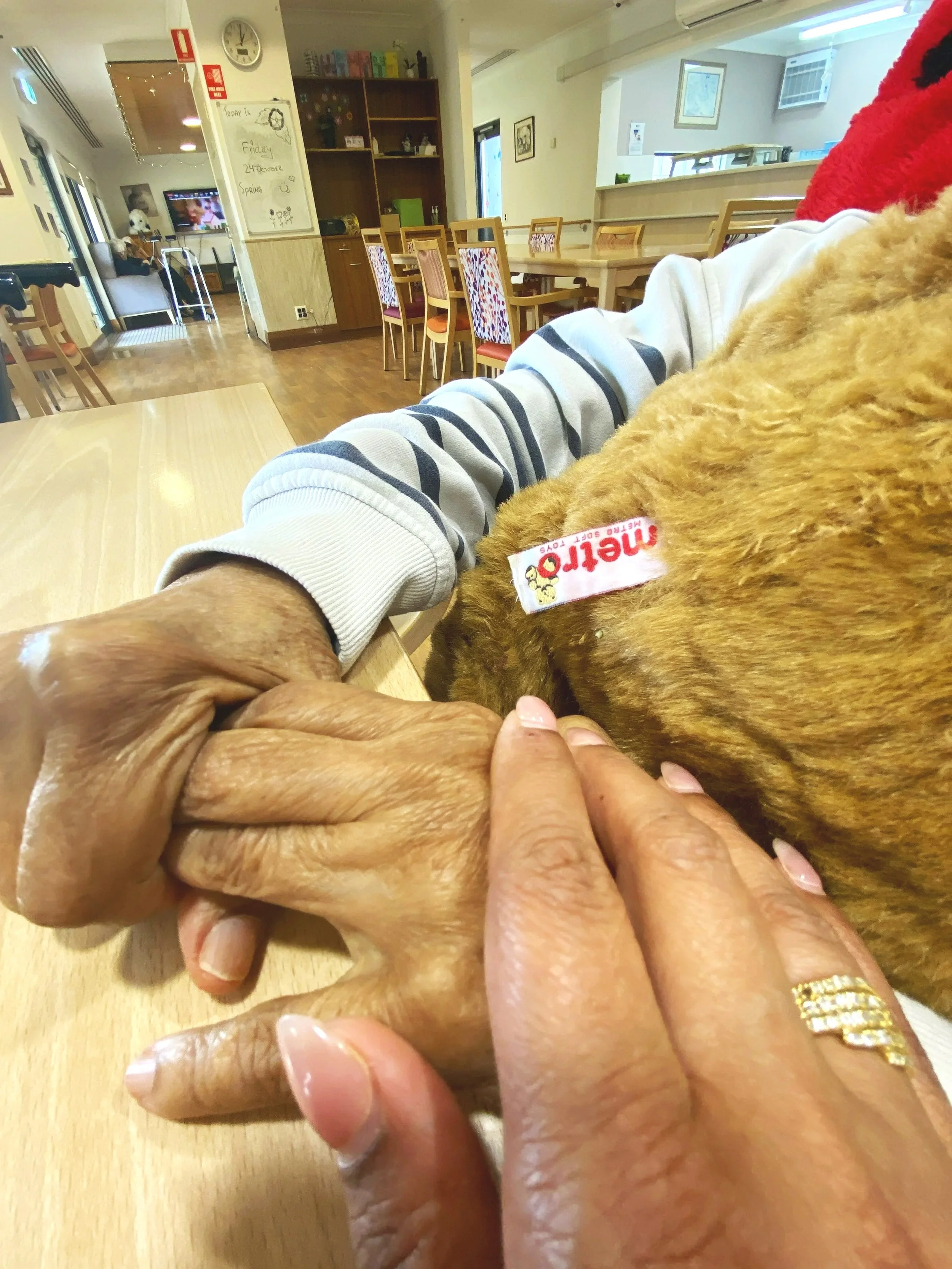
In the 1970s, Dr Pauline Boss coined the term "Ambiguous Loss." Dr Boss developed her theory of Ambiguous Loss across decades in her work as a family therapist in Minnesota. In 1999, she published the book "Ambiguous Loss: Learning to Live with Unresolved Grief" and "Loving Someone Who Has Dementia," among others. In one of her books, she outlines two types of Ambiguous Loss: Type One and Type Two.
Type 1 is when someone is physically gone but psychologically there. This might refer to people who are missing, have been divorced, immigration, are in war, or have been deported, to name a few. Type 2 happens when there's a lack of psychological presence while someone is physically there, in instances where there is cognitive decline or emotional unavailability, such as dementia, a traumatic brain injury or even a chronic mental illness, to name a few.
Working in the field of counselling, this term comes up a lot, and when I learnt about this, I thought about my life experience with our mum as a caregiver, who is now in the advanced stages of dementia, and the sadness over the years we have carried as a family silently for our beautiful mum. My dad, sister, brother and I, with our families, played the role of caregivers at different points as my mum's condition deteriorated over time. It's an unimaginable, invisible weight of sadness we carry.
Ambiguous loss is a type of unclear loss; it's not about death. Like children who are kidnapped or soldiers missing, or it can be the opposite, where the person is physically present but psychologically not with us, like someone who has dementia.
Here I would like to focus a bit on the loss and grief you experience caring for a person with dementia, it's ongoing: not a one-time trauma, like the sudden death of a family member or friend. At times, I have found that some of my clients feel judged when they bring up this grief, as some think grief is only the death of a loved one, and Ambiguous Loss is not very well understood unless you walk through it yourself. With Ambiguous Loss, there is no finality to the loss, and as time goes on, you find a gradual decline that unfolds in stages, making it hard to find hope and meaning at this time. In my life with our beautiful mum, I decided to accept this loss after an extended period of time. The moment I realised that my mum's condition was declining with her dementia and stopped fighting the disease and finding hope and strength through prayer and surrender, it started to become slightly lighter, yet heartbreaking.
Dr Boss says it's like frozen grief and explains the person has not died, yet there is so much sadness as the happy times and the gradual grief or missing parts of the person that used to be fully physically, psychologically and mentally intact is to be grappled with. The stress of living with Ambiguous Loss is enormous, and managing our stress levels is vital. In Ambiguous Loss, sometimes life does not seem normal, and staying strong is part of the process and stabilizing, but the journey to get there is tough. Not fighting the loss but moving from denial to embracing this ambiguity is hard, but it can be achieved.
Ambiguous loss is an unusual grief and one that is different to other losses, and the caregiver has to watch now and see the person slowly declining right before their eyes. It's very painful, and once the person does die, then there is another part of the grief that comes through.
I want to share some tips from Dr Boss on the ways to deal with this Ambiguous Loss or Frozen Grief, and some of my ideas on being a caregiver:
Identifying the loss and recognising the multiple emotions that surface – deciding to accept (your decision), which gives more agency to the caregiver.
Embrace the Ambiguity and not holding onto Absolutes - Reminding myself that my mum is both here and gone, which is as close to the truth as we can get. We have some things to grieve, and we also acknowledge that she is still present with us.
Think of new hopes and new purposes to balance the downside and sadness of the Ambiguous Loss.
Incorporate the person's family traditions and remember the person with fondness, meaning, and purpose. Remember for them. In my case, I remember my mum and her mannerisms a lot, and last year my girls and I made her favourite cake for Christmas, the one she would make year after year for us growing up.
Maintaining stress management, supporting the grieving family and maintaining a social life in caregiving.
Dementia stole our mum over 14 years ago, and the journey has been one of the hardest our family has ever had to navigate. A few days ago marked one year since she went into full-time care — the hardest decision we've ever had to make, especially for my dad, who had mum by his side for over a lifetime. Alongside my dad, we have been my mum's caregivers all these years.
Her memories are fading, but what she does remember is her favourite hymn, The Old Rugged Cross. And on the days she can't remember, I tell myself: I will remember for us.
My mum is a remarkable woman — kind, generous, selfless, always looking out for those in need. She is everything I would want to be.
For those walking a similar journey, the long goodbye is real, and Ambiguous Loss is one of the hardest emotions to carry. When you love someone with dementia, you experience these emotions at different times and in different ways. May you find comfort and support in the midst of it.
My prayer is for the heart of a caregiver who never stops grieving, witnessing a loved one with dementia slowly fade right before your eyes. If you are a caregiver, know that you are seen, understood and appreciated. If you know of a caregiver, be kind to them. We continue to hope for medical interventions with dementia and for caregivers to be surrounded by people who can be givers, not only takers, in their lives.
I often pray for peace and strength. I hope that life's trials soften us, make us kinder, gentler, and deepen our humanity.
This is the most valuable part of my blog post for me personally on Ambiguous Loss. These are the words written by my very own, amazing, talented sister, Sabrina Rodriques.
Please have a read:
The Final Bend by Sabrina Rodrigues
It started with unknown voices and imaginary friends,
Too soon, it became a mind playing games.
Caught in a struggle between real and fake,
Mum's decline was slow; our hearts ached.
Mum's memory began to fail with time,
Her strength and movement, a further decline.
We watched with sad but hopeful faith,
In our God who holds her through His Amazing Grace.
Dementia - you have taken mum's mind and body,
But you could not destroy her soul.........
She gives dad and each of us strength and resilience untold.
Mum will always be our mum,
A loving, kind and compassionate being.
Others first before herself is what she still believes.
Her helpless journey is one of ours, too.
We will walk with you, mum, till the end…
Till the road you travel has its final bend.
We will always love you, mum!
By Sabrina Rodrigues