
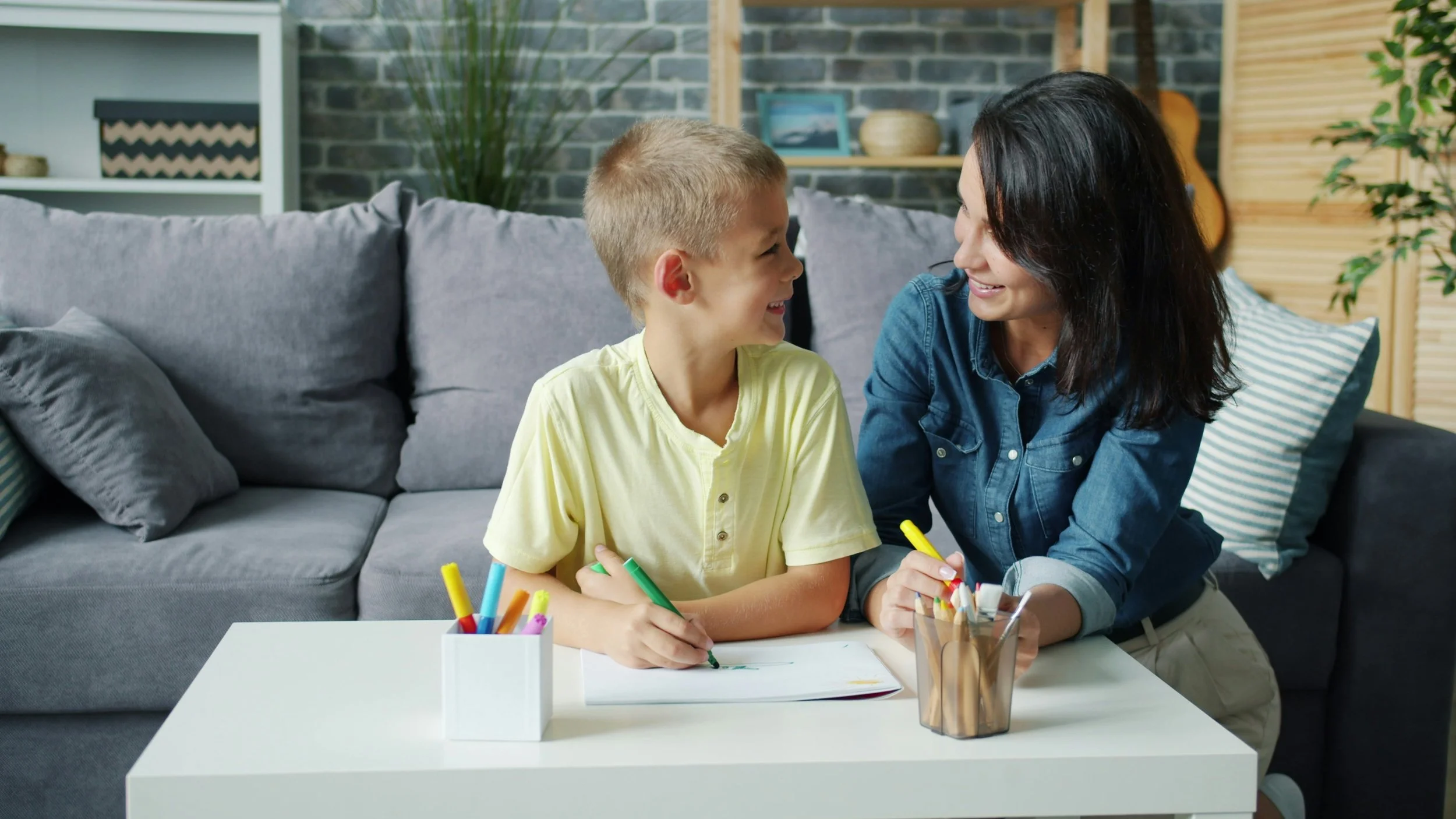
As parents, we often arrive at counselling hoping to find the right tools for our child. We want our children to be brave, resilient, confident and happy; we want school to feel easier, and most of all we want them to flourish. Yet sometimes the most powerful tool is not something we give our children or another strategy to be implemented; it is what they see us practise ourselves.
A mum’s hopes
A while ago, I met with a mum who wanted to talk about her young son and whether counselling might support him. That first session is always with the parent, giving us time to explore the child’s strengths, challenges and wider family picture.
Mum described a bright, curious little boy who loved soccer, swimming and martial arts. He asked big questions, thought deeply, noticed things others might miss and was kind. At school, though, some things felt particularly hard. His teacher had noticed that he could become overwhelmed when asked to begin a task, would communicate that he couldn't do it, and would hold himself to high standards, even though he was academically strong and capable.
Our conversation did not raise any obvious developmental concerns. His family had thoroughly explored many possible ways to support him. They were arranging hearing, vision and sleep assessments and considering medical, paediatric and school-based support, all with the hope of helping him grow well.
Like many loving parents, Mum had tried many things, from
· Morning affirmations.
· Nightly prayers.
· Words of encouragement.
· Big Hugs.
· Supportive teachers.
· Looking into social stories.
· Homework strategies.
· Love, patience and commitment.
And underneath it all was a question many parents quietly carry: “How do I help my child believe in themselves and succeed?” As we talked, Mum began to notice that she lived with many anxious thoughts and placed a great deal of pressure on herself. She described herself as a perfectionist, someone who cared deeply and wanted the very best for her children yet would allow moments of worry to override her otherwise positive self. Many of us parents may recognise something of ourselves in her story.
What our children see in us
Children often learn as much from what we model as from what we tell them. When the caring adults in their lives rush around, worry, overthink, imagine the worst or place relentless pressure on themselves, children can pick up on that emotional atmosphere. This is not about blame or about getting parenting wrong; it is simply a reminder of how closely children tune into the adults they love.
The article 8 Ways Parents Increase Children’s Anxiety | Psychology Today Australia explores everyday responses that can unintentionally add to a child’s worries. Its practical suggestions remind us that we can help build resilience not only through what we say but also through how we respond to anxiety ourselves.
An anxious parent does not automatically create an anxious child. Children can, however, benefit when the adults around them learn to notice and regulate their own anxiety. As Parental anxiety: how to handle worries and feel better reminds us, “Parental anxiety is when you have anxious feelings, physical reactions and behaviour linked with being a parent or parenting your child. It’s normal and natural to worry or feel anxious as a parent. After all, raising children is a big and important job” (para. 6).

Easing the pressure on ourselves
Sometimes the most powerful support is not another reward chart, strategy or appointment. It may be helpful to pause and ease the pressure we put on ourselves as parents. When we make room for mistakes and show our children that things do not have to be perfect to be okay, they learn that setbacks can be faced and that recovery is possible. My blog post, Finding Peace Amid Anxious Thoughts — Arukah Counselling | Counselling in Perth, offers some insight on managing our anxious thoughts.
One of this mum’s greatest hopes was that her son would learn to begin difficult tasks, trust himself and become more resilient. Those are beautiful hopes. Often, that journey begins when the adults around the child practise facing situations that make them anxious rather than avoiding them, seek support when they need it, and offer themselves the same compassion they are working so hard to give their children. As the well-known idea attributed to Dr Bruce Perry reminds us, it is difficult for a dysregulated adult to help a dysregulated child find calm.
I have also found Parenting and mental health | Beyond Blue - Beyond Blue helpful, as it offers advice, information, and resources for us parents while acknowledging that parents need care and support too.
Making room for joy and connection
As our session came to a close, Mum shared a funny story from the school run that morning that made us both laugh. After talking about worries, goals, perfectionism, confidence, anxiety, school, strategies and resilience, that moment of lightness felt important. It reminded us that family life is not only made up of problems to solve and agendas to meet. Amid the tiredness and busyness, there is still joy to be had, connections to build, laughter to share, and space for unexpected questions on a school run. As parents, we will not have all the answers, and we will make mistakes, but we can keep returning to presence, kindness, and connection with our children.
In that moment, it was clear that this mum did not need to try so hard to make her child brave and confident. She was already a wonderful mum, and right in front of her was the curious, thoughtful child she loved. For a little while, there was nothing to fix and no need to hold everything together perfectly. She was simply a mum enjoying her child and sharing that joy with me, another mum.
My encouragement in this post is to remind us that, as parents, we don’t always get it right, and we often learn as we go, yet we can be the adults who continue to offer our guidance, presence, and love to our children, whom we care about deeply.
Always good to connect here 😊